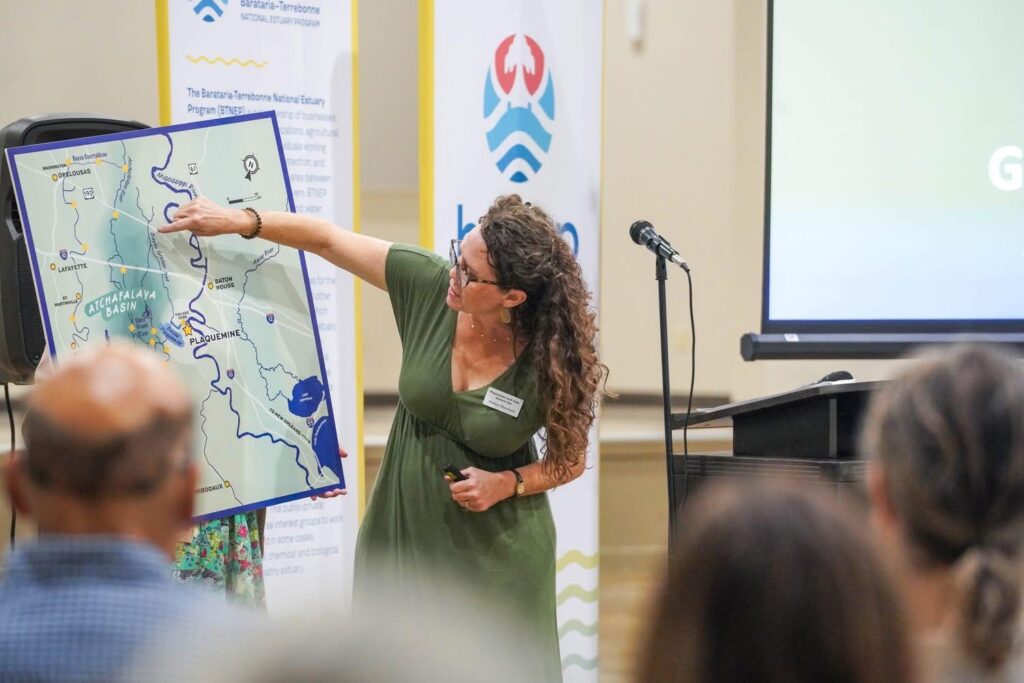
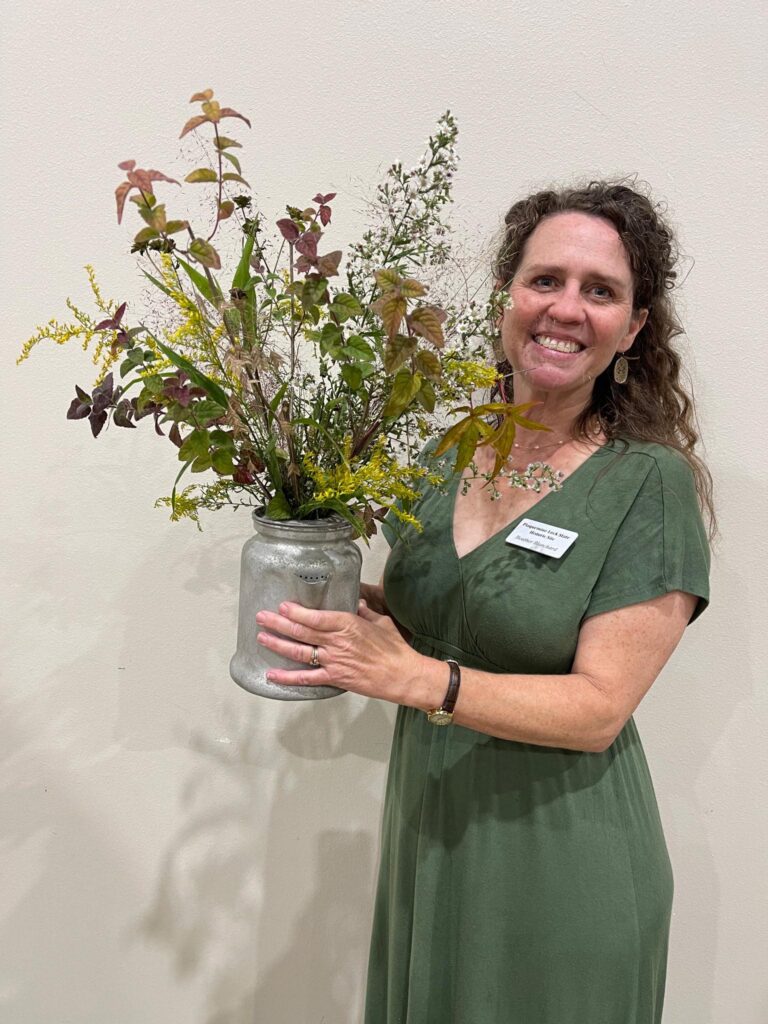
Heather Blanchard presenting plans for the Plaquemine Lock State Historic Site.
Wild Ones Greater Baton Rouge Membership Chair, Heather Blanchard, is passionate about the Plaquemine community and is actively involved in the project that is aiming to restore the Plaquemine Lock site and beautify and increase the biodiversity of the grounds. Plaquemine is located just downriver from Baton Rouge, in the heart of the Mississippi Flyway, a vital corridor used by millions of migrating birds for food, rest, and navigation.
Heather is spreading the passion for this site by presenting the Friends of the Lock project plans to the community. In November, Heather presented to Plaquemine Rotary Club about the importance of pollinators and how the Lock site plan is an opportunity to collaborate in Rotary International’s Operation Pollination. She also presented the Lock plans at the Barataria-Terrebonne National Estuary Program (BTNEP) Quarterly Management Conference held at the Plaquemine Community Center.
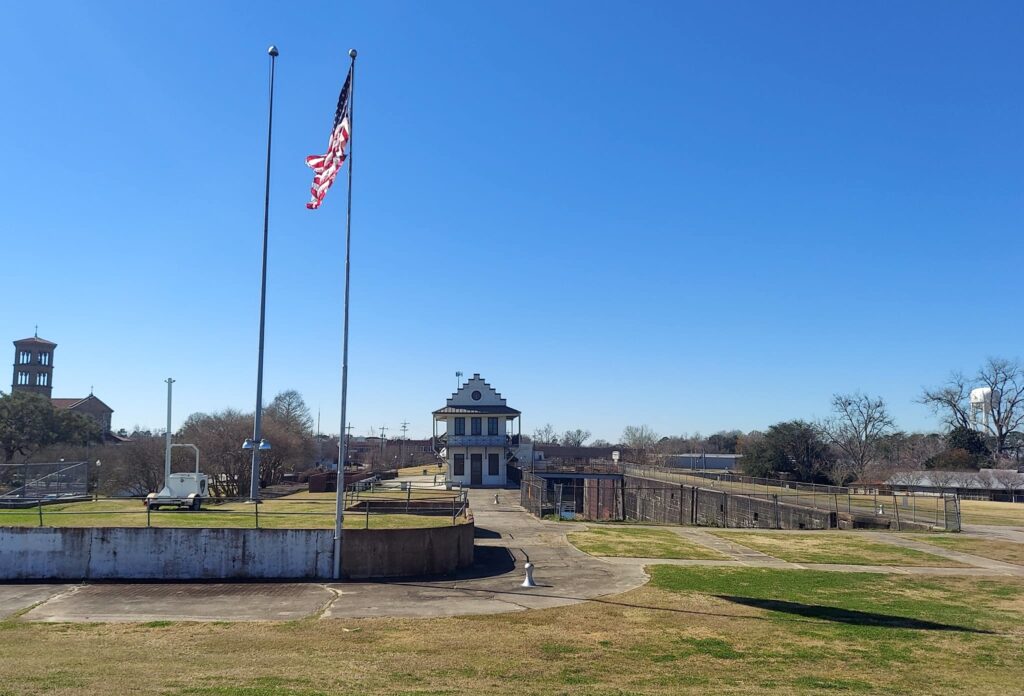
Inspired by the positive reception, Heather then submitted grant proposals to BTNEP for two pilot native plant landscapes at the Lock site with the goals of enhancing visitor experience with beauty, pockets of shade, increased biodiversity, and increased use of the Lock site. Signage will include plant identification with QR codes linking to information about the plant and its ecological significance to local land and waters.
The Greater Baton Rouge chapter of Wild Ones is very excited to share her passion and helping with the future project. Stay tuned for updates!
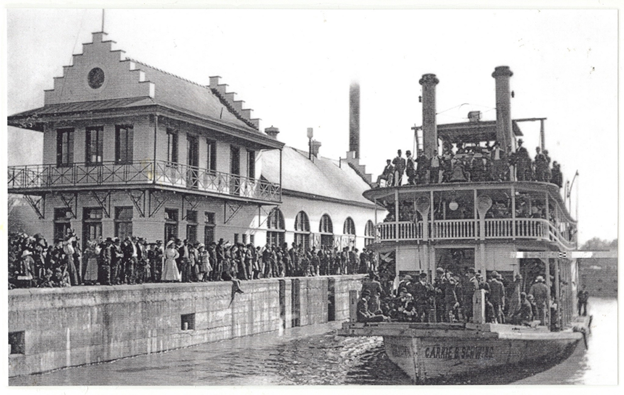
A Brief History of the Lock
In the 1860s, a bold proposal was made to build a lock in the sleepy town of Plaquemine, Louisiana to provide a a new route for ships to go from the Mississippi River to the Gulf through Bayou Plaquemine and the Grand River. This would save over 180 miles in travel and fuel costs, a very economical alternative to following the Mississippi River all the way through New Orleans to the mouth of the river. After many engineering problems, shifting soils, and river levee breaches, the Lock and the Lockhouse with its incredibly unique Dutch architecture design was finally opened by the U.S. Corps of Engineers in 1909. The gamble paid off, and the Lock was a huge economic success for Plaquemine, which quickly became a major maritime transportation hub. The lock was open for 52 years, and was closed in 1961 because barges had grown too large to navigate the tight turns, and a new lock, the Port Allen Lock, opened 2 miles upriver which provided the navigation space needed for the longer barges. The site was turned over the State in 1978 and reopened as a tourist attraction and State Park in 1982.
The Friends of the Plaquemine Lock State Historic Site nonprofit organization was founded in 2011 support the preservation and restoration of this unique building and important historic site which was slated for permanent closure. The Friends were successful in convincing the state to keep the site, but the day-to-day management was unfunded. Currently, the Parish handles operations and the City provides the utilities and grounds maintenance. In 2023, the “Friends of the Lock” advocated for and fundraised for extensive renovations, upgrades, and repairs that were completed in June 2025. In the Phase II plans, currently in the fundraising stage, there are plans to repair the boathouse and improve the landscape and grounds.